Configure a plastic cup production line with WX cup machine, custom mold, PP/PS/PET sheet extruder, auxiliaries, stacking and packing.
# Complete Plastic Cup Production Line: Cup Machine, Mold and Sheet Extruder
**Meta title:** Complete Plastic Cup Production Line | WEIXIN
**Meta description:** Configure a plastic cup production line with WX cup machine, custom mold, PP/PS/PET sheet extruder, auxiliaries, stacking and packing.
**Suggested URL slug:** `complete-plastic-cup-production-line`
**Primary keyword:** complete plastic cup production line
**Secondary keywords:** plastic cup making machine, disposable cup production line, cup thermoforming machine, plastic cup mold, PP PS PET sheet extrusion line
A complete plastic cup production line connects raw-material preparation, sheet extrusion, thermoforming, mold design, cup collection, scrap recycling and packing. The main equipment is the plastic cup making machine, but its model cannot be selected independently. The finished cup dimensions, material, weight, sheet thickness, mold cavity layout and required output determine which WX model and upstream sheet line are suitable.
WEIXIN Machinery supplies project configurations built around the actual product. A basic project can start with purchased sheet, one cup machine and one mold. A full factory setup can add a PP/PS/PET sheet extrusion line, air compressor, chiller, crusher, mixer, loader, cup stacker, counting and packing equipment. This page explains the standard WX-660, WX-720, WX-750 and WX-850 families and how each part of the line works together.
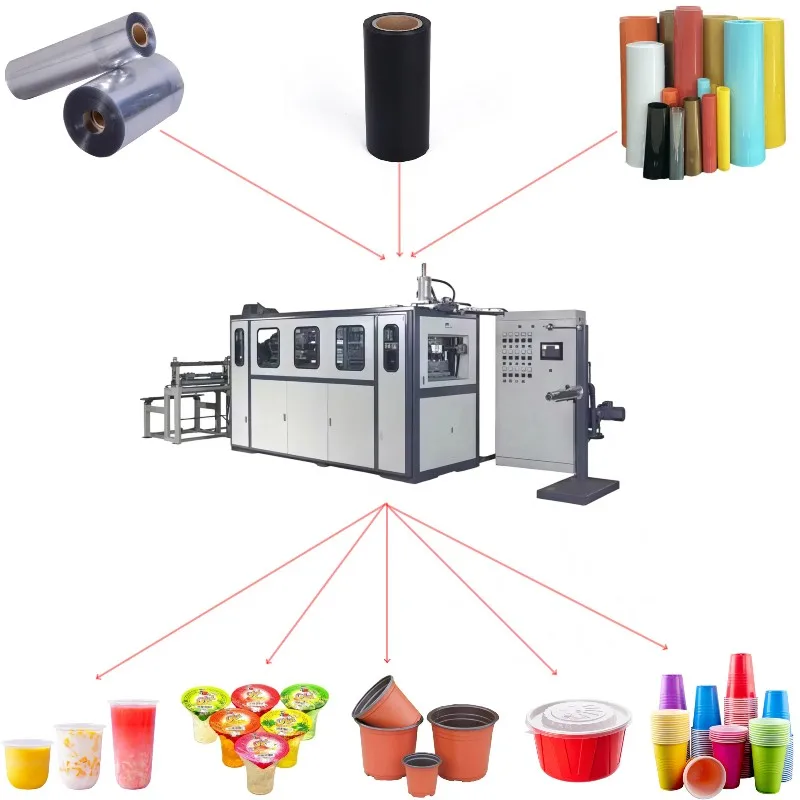
Standard WX Plastic Cup Making Machine Parameters
The WX series is designed for roll-fed thermoforming of cups, bowls and other deep round products. The cup machine does not process plastic pellets directly; it receives a prepared sheet roll, heats the sheet and forms it inside a matched cup mold. Standard family parameters are shown below. Cylinder-type, servo-type, high-speed and used-machine variants can differ, so the exact order configuration must follow the final technical sheet and contract.
| Parameter | WX-660 | WX-720 | WX-750 | WX-850 | |---|---:|---:|---:|---:| | Forming area | 660 × 320 mm | 720 × 420 mm | 750 × 500 mm | 850 × 560 mm | | Maximum sheet width | 680 mm | 760 mm | 780 mm | 880 mm | | Sheet thickness | 0.3–2.0 mm | 0.3–2.5 mm | 0.3–3.0 mm | 0.3–3.0 mm | | Maximum forming depth | 150 mm | 160 mm | 170 mm | 180 mm | | Typical cup diameter | 40–95 mm | 55–98 mm | 60–110 mm | 65–120 mm | | Typical 7 oz mold cavities | 24 / 28 | 28 / 32 | 32 / 36 | 36 / 45 | | Reference speed | 15–35 cycles/min | 15–36 cycles/min | 15–35 cycles/min | 15–35 cycles/min | | Typical output | 20,000–45,000 pcs/h | 25,000–55,000 pcs/h | 30,000–65,000 pcs/h | 35,000–80,000 pcs/h | | Installed power | 45–60 kW | 55–70 kW | 60–75 kW | 70–85 kW | | Compressed air | 0.6–0.8 MPa | 0.6–0.8 MPa | 0.6–0.8 MPa | 0.6–0.8 MPa | | Suggested chiller | 3–5 HP | 5 HP | 5–10 HP | 10 HP |
Output figures are model-family references rather than unconditional guarantees. Actual pieces per hour depend on cup size, cavity count, material, sheet condition, forming cycle, cooling, release, stacking and operating efficiency. Theoretical output is calculated as confirmed cavities × cycles per minute × 60; practical output must be verified under the agreed production conditions.
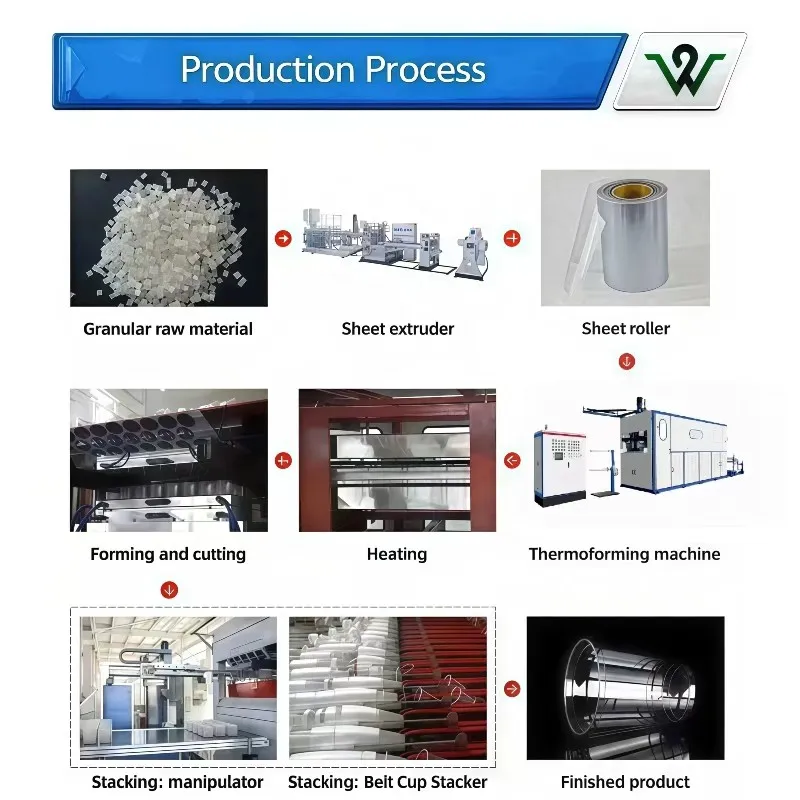
Plastic Cup Manufacturing Process
The complete process begins with plastic resin when an in-house sheet extrusion line is included. PP, PS, selected PET or PLA material is fed into the extruder, plasticized and passed through a flat die. A roll stack forms and cools the continuous sheet before winding. The finished roll must match the cup machine in width, thickness, roll core, winding direction and tension.
The sheet roll is then loaded into the cup making machine. The feeding system advances the sheet through the heating section, where it reaches the forming window required by the selected material. The heated sheet enters the mold area for forming and cutting or separation. Finished cups are released and transferred to a stacking system, robot or conveyor. Depending on the automation target, the cups can then be counted, sleeved and packed.
The remaining sheet skeleton is collected and sent to a crusher. Reuse strategy depends on the material, product requirements and applicable food-contact rules. Ground material may return to the sheet-production route only when the project recipe and quality requirements allow it. This creates the production chain: pellets → sheet extrusion → roll sheet → heating → forming and cutting → stacking → counting and packing, with controlled scrap handling.
Cup Mold Design and Cavity Selection
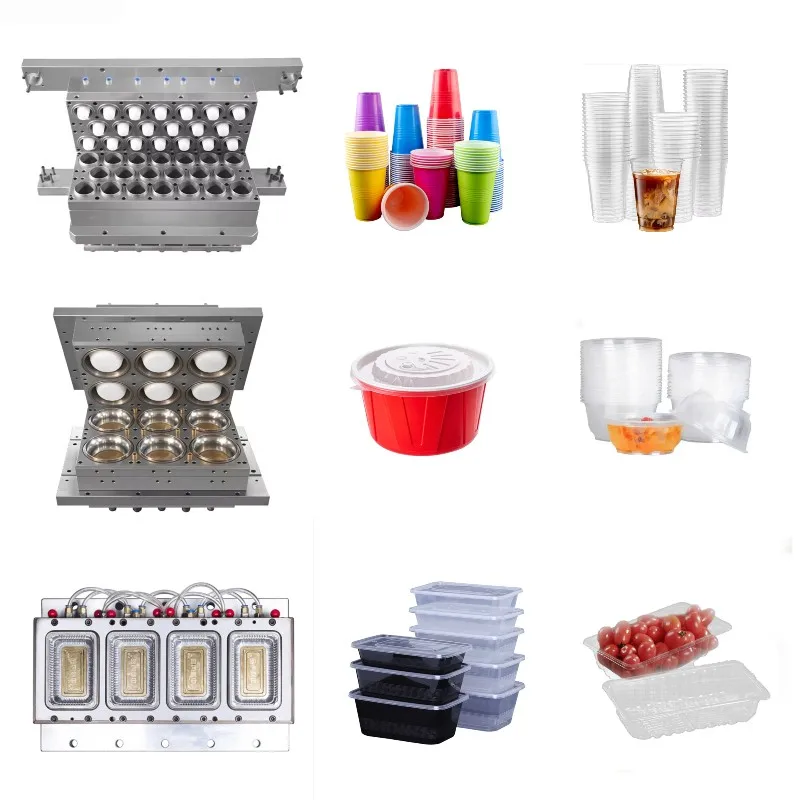
The cup machine and cup mold must be designed as one production system. A mold cannot be selected only from the cup volume or a photo. The required inputs include rim diameter, bottom diameter, cup height, draft angle, stacking geometry, material, product weight and sheet thickness. These values determine whether the cup fits the machine's forming area and depth and how many cavities can be arranged without compromising forming, cooling, cutting or release.
Cavity count directly affects theoretical pieces per cycle, but more cavities are not automatically better. The best layout balances working-area utilization, heat distribution, material flow, cooling time, cutting space, product release and automatic stacking. A high-cavity mold that cannot cool or release consistently may deliver less practical output than a properly balanced mold.
For an existing cup, buyers can provide a physical sample or detailed drawing. For a new design, send the top diameter, bottom diameter, height, target weight, material and stacking requirement. If an old mold must be reused, the mold interface, dimensions, mounting points and machine compatibility must be checked before a recommendation is made.
Matching the PP, PS or PET Sheet Extrusion Line
A sheet extrusion line is required when the factory wants to produce roll sheet from plastic granules. If reliable sheet with the correct specification is available locally, a new project can start with purchased rolls and add extrusion later. In-house extrusion becomes more relevant when the buyer wants greater control over sheet availability, thickness consistency, material recipe and long-term operating cost.
The sheet line must be selected from the downstream cup, not from the resin name alone. First confirm the finished product and cup-machine model. Then define material, virgin or recycled-content plan, sheet width, thickness, target output in kg/h, roll diameter, core size, winding direction, cooling utilities and available factory space. Only after these points are known should the extruder structure, die width, roll width, cooling and winding system be finalized.
For PP and PS cup projects, the extrusion line must deliver stable thickness, weight consistency and roll feeding. Selected PET cup projects require confirmation of resin preparation, transparency, filtration, degassing and downstream heating behavior. The sheet should be tested on the intended cup machine and mold whenever practical because extrusion quality and thermoforming performance are directly connected.
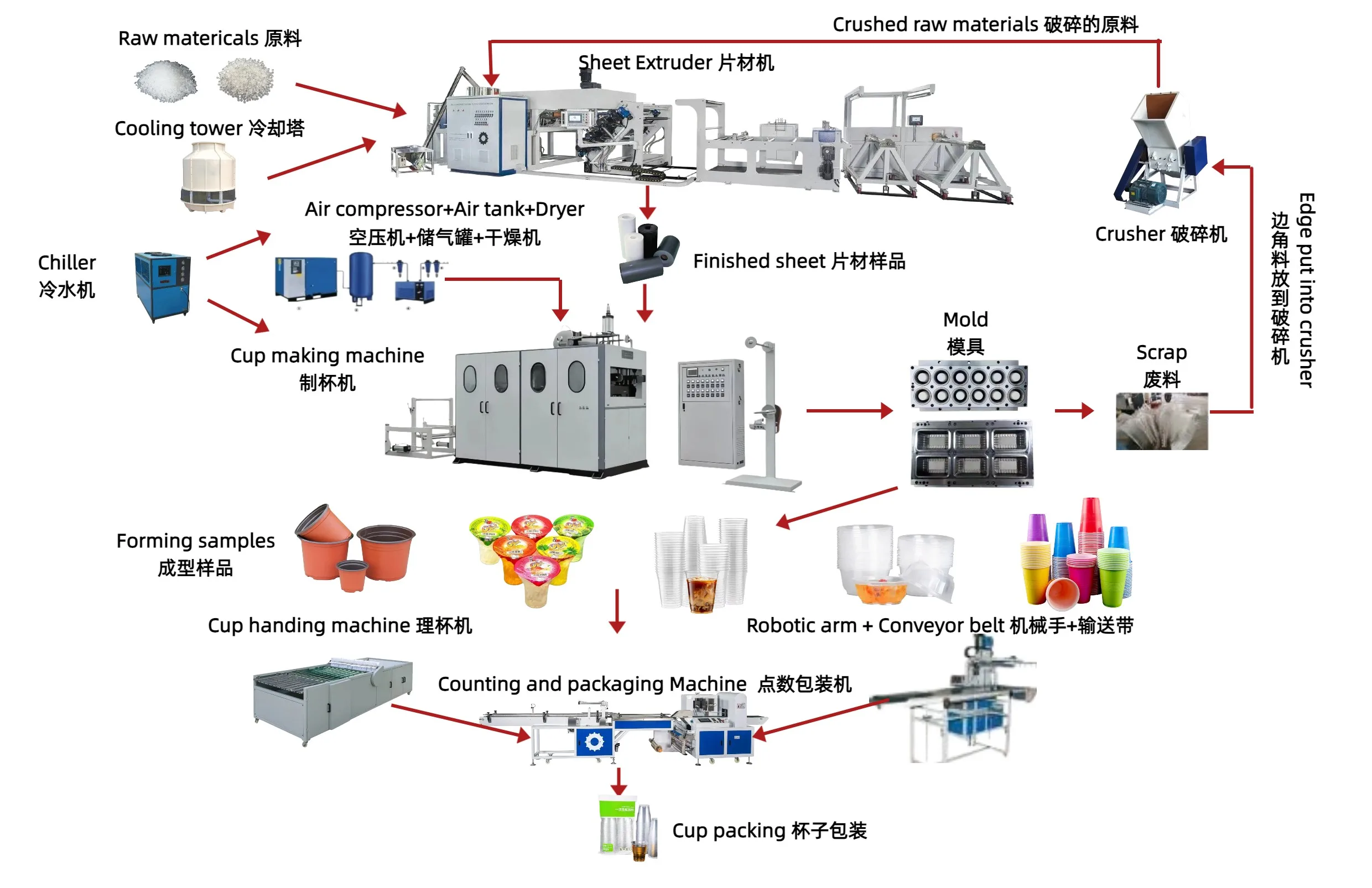
Equipment Included in a Turnkey Cup Factory
The exact equipment list depends on whether the buyer wants a basic startup line, a standard production line or a more automated factory. Not every project needs every machine on the first day. WEIXIN Machinery can stage the investment around the available sheet supply, product plan, factory space, labor model and budget.
| Production function | Typical equipment | Selection focus | |---|---|---| | Sheet production | PP/PS/PET sheet extrusion line | Material, width, thickness, kg/h, roll specification | | Cup forming | WX-660 / 720 / 750 / 850 cup making machine | Product dimensions, mold area, depth, output | | Tooling | Custom cup mold | Geometry, cavities, cooling, cutting, release and stacking | | Compressed air | Air compressor, air tank and dryer | Required pressure, air volume and air quality | | Cooling | Chiller and/or cooling tower | Machine model, mold cooling and local conditions | | Material handling | Mixer and automatic loader | Recipe, throughput and factory layout | | Scrap recycling | Crusher or grinder | Skeleton size, material and reuse plan | | Cup handling | Belt stacker, robot and conveyor | Cup geometry, nesting and automation level | | Packing | Counting and packing machine | Pack quantity, sleeve format and labor target |
Utilities and layout must be considered early. The factory needs suitable electricity, compressed air, cooling water, ventilation, material storage, finished-product space and safe access for mold changes and maintenance. A line layout should show material flow from extrusion to sheet storage, cup forming, scrap handling and packing without creating unnecessary cross-traffic.
Products the Line Can Manufacture
With the correct machine, mold and sheet specification, the WX cup-making family can produce a wide range of deep round thermoformed products. Typical examples include disposable water cups, cold-drink cups, milk-tea cups, yogurt cups, jelly cups, dessert cups, portion cups, bowls and selected round food containers. Clear, white, black or colored products can be considered according to material and sheet formulation.
Product shape determines equipment direction. Deep cups and bowls usually belong on a cup making machine. Shallow rectangular food boxes, fruit boxes, lids and trays are generally better matched with a three-station thermoforming machine. This distinction matters because one machine should not be promoted as the best solution for every thermoformed package.
The attached samples demonstrate different cup and container forms, but the final recommendation must start from the buyer's actual product. Send a photo or drawing, top and bottom diameters, height, unit weight, material and required output. The engineering review can then match the product to the forming area, mold cavity layout, sheet line and cup-handling method.
Real Machine and Product Video
The supplied video can be used to show the cup machine, tooling, process or finished samples. Before publication, its exact scenes should be checked so the title does not claim a speed, test condition or product that the footage does not demonstrate.
<video controls preload="metadata" width="100%" poster="https://sc02.alicdn.com/kf/Hfc434dbda6f9469ab0339c98bce78b34Q.jpg"> <source src="https://sc02.alicdn.com/kf/Hde3fa286d6cc424c9129a7e0f74e5d66e.mp4" type="video/mp4"> Your browser does not support the video tag. </video>
For project acceptance, a useful trial should record the sheet material and thickness, mold cavity count, cup dimensions, machine cycle, release, stacking result and finished-product appearance. When a sheet extrusion line is included, the upstream test should also document roll width, thickness and winding. Linking these records gives the buyer stronger evidence than a short no-load machine video.
The buyer can also request close-up footage of the control interface, mold movement, cup rim, wall distribution and stacked products. These views help separate a general promotional clip from a project-specific production record.
Information Required for a Full-Line Proposal
A turnkey quotation cannot be prepared accurately from the words “cup machine” alone. The project begins with the finished sample. Please provide the product photo or drawing, rim diameter, bottom diameter, height, target weight, material, sheet thickness and expected output. Also state whether you will buy finished sheet or produce it in-house.
For the factory setup, confirm local voltage and frequency, available workshop dimensions, compressed-air and cooling-water conditions, destination port, preferred automation level and purchase schedule. If multiple cups will be produced, identify which product is the main volume item and which molds are planned for later expansion.
After reviewing these details, WEIXIN Machinery can propose the cup-machine model, mold cavity direction, sheet extrusion line, auxiliaries, cup collection and packing configuration. Final parameters, electrical load, capacity and delivery scope remain subject to the approved technical sheet and contract.
It is also useful to state the expected daily operating hours, number of planned molds and whether packing will be manual or automatic. These points affect sheet demand, utility sizing, labor planning and the staged investment schedule.
Frequently Asked Questions
Does a plastic cup making machine process plastic granules directly?
No. The cup machine receives thermoforming sheet rolls. Plastic granules must first be converted into sheet by a suitable extrusion line, or the factory can purchase prepared sheet from a supplier.
Which materials can the WX cup machines use?
Typical project materials include PP, PS, PET and PLA. HIPS or PE availability depends on the model and configuration. The sheet and heating process must be matched to the product and machine.
How is production output calculated?
Theoretical output equals confirmed mold cavities × cycles per minute × 60. Practical output is affected by cup design, material, sheet quality, cooling, release, stacking and operating efficiency and should be confirmed under agreed trial conditions.
Do I need a sheet extrusion line at the beginning?
Not always. If stable sheet is available locally, a factory can begin with purchased rolls. An in-house line is more suitable when sheet supply, quality control or long-term material cost justifies the additional investment and operation.
What is included in a complete cup line?
A full configuration can include the sheet extruder, cup machine, cup mold, air compressor, air tank, dryer, chiller, cooling tower, mixer, loader, crusher, cup stacker, conveyor, counting and packing equipment.
Can one mold make different cup sizes?
A mold is designed around a specific product geometry and cavity layout. Different cup sizes normally require separate molds, although the selected machine can support multiple compatible molds within its forming range.
Request a Turnkey Cup Production Plan
Send your cup sample or drawing, dimensions, material, weight and target output. WEIXIN Machinery will work backward from the finished product to the cup mold, WX machine model, sheet specification, extrusion line, auxiliaries and packing route. The result is a practical equipment list built for the cup you want to sell—not a generic collection of machines.
The proposal can be divided into a basic, standard or more automated stage. A startup buyer may use purchased sheet and manual packing first, while a larger factory may add extrusion, automatic stacking and counting/packing from the beginning. The correct scope depends on local sheet supply, labor, workshop utilities and planned production volume.
For technical review, prioritize one main cup product and provide the most complete data for that item. Additional molds and products can then be evaluated against the selected machine and factory layout without weakening the first production target.
**Knowledge-base references:** *WEIXIN-PS-01 Plastic Cup Making Machine Product Parameter Specification*, *WEIXIN-PS-05 Thermoforming Mold/Cup Mold Product Parameter Specification*, *WEIXIN-KB-05 Plastic Sheet Extrusion Line Deep Product Knowledge*, and *Cup Making Machine FAQ*.