Evaluate a used PET sheet extrusion line by screw condition, vacuum venting, die, three-roll calender, controls, winding and real sheet testing.
# Used PET Sheet Extrusion Line: What to Check Before Buying
**Meta title:** Used PET Sheet Extrusion Line Buying Guide
**Meta description:** Evaluate a used PET sheet extrusion line by screw condition, vacuum venting, die, three-roll calender, controls, winding and real sheet testing.
**Primary keyword:** used PET sheet extrusion line
**Secondary keywords:** used PET sheet extruder for sale, PET sheet production line inspection, twin-screw PET extrusion machine, used Jwell extrusion line
A used PET sheet extrusion line should be evaluated by the quality of sheet it can produce today—not only by its original brand, motor size or component list. The Jwell line documented here uses a 75 mm parallel twin-screw extruder, 132 kW main motor, ABB inverter, vacuum venting, 1,000 mm Jingcheng die, servo-driven three-roll calender and three-station winding. These are valuable reference points, but buyers still need a material trial, mechanical inspection and written delivery list before making a purchase decision.
This guide explains how the listed configuration connects to transparent PET sheet production and what evidence a buyer should request when sourcing used equipment for fruit boxes, milk-tea cups, egg trays and other thermoformed packaging.
Start With the Finished Thermoformed Product
The first purchasing question should not be “How large is the motor?” It should be “What package must this line supply?” A transparent fruit box, deep beverage cup and egg tray can require different combinations of sheet thickness, impact behavior, transparency, roll format and forming performance. The extrusion line must be matched to the final product and the thermoforming machine that will consume the roll.
For this used Jwell line, the reported sheet thickness range is 0.3–1.5 mm, the working width is 1,000 mm and the flat die is also 1,000 mm wide. Those figures define a possible operating window, but they do not prove that every thickness can be produced at full width with the same output and quality. A buyer should choose one or more representative specifications and request a test at those conditions.
Before inspecting the machine, prepare a product drawing or sample, required sheet thickness, usable width, roll diameter, core size, PET material plan and target output. If a thermoforming machine is already installed, include its maximum sheet width, feeding direction and heating requirements. This information turns a generic equipment test into a project-specific acceptance test.
Evaluate the Twin-Screw Extrusion and Vacuum System
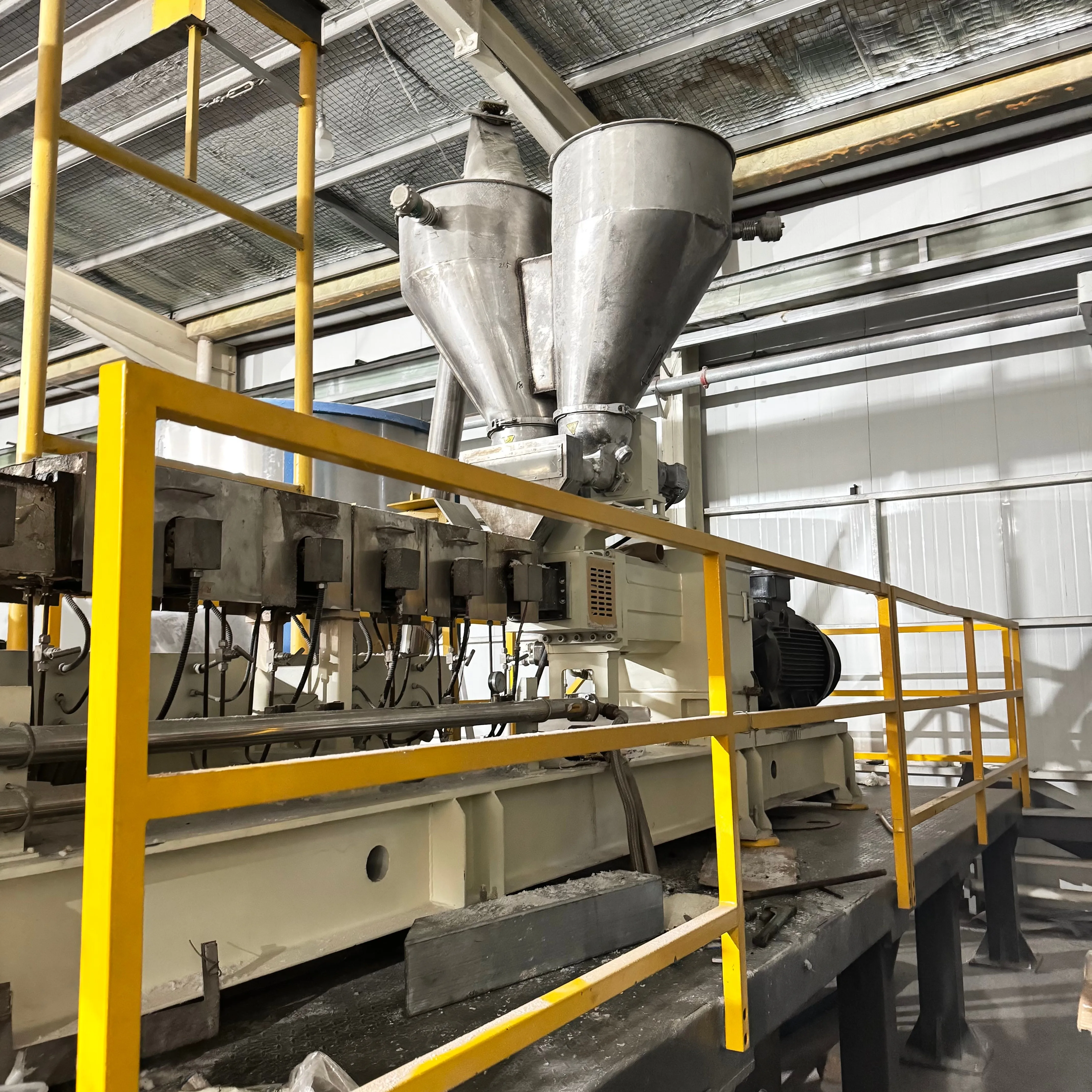
The documented line uses a 75 mm parallel twin-screw extruder with twin hoppers, twin feeding units and vacuum venting. In PET processing, the extrusion section must convey, mix, plasticize and degas the material before it reaches the die. The vacuum system is especially important because gas and moisture-related defects can affect the appearance and consistency of transparent sheet.
On a used line, component brands do not reveal the remaining service condition. Inspect the screw and barrel for wear, check gearbox sound and lubrication, and observe melt pressure after the machine reaches stable operation. Both feeders should run consistently at the required setpoints. The vacuum pump, piping and vent port should be checked for leakage, contamination and stable vacuum response.
The main motor is rated at 132 kW and controlled by an ABB inverter. During testing, record motor load and inverter status at the agreed material, width and thickness. A high-quality test report should state the resin, recycled-content ratio, target sheet specification and production duration. Without these conditions, a short running video cannot support a reliable output claim.
Inspect the Screen Changer, Die and Melt Delivery
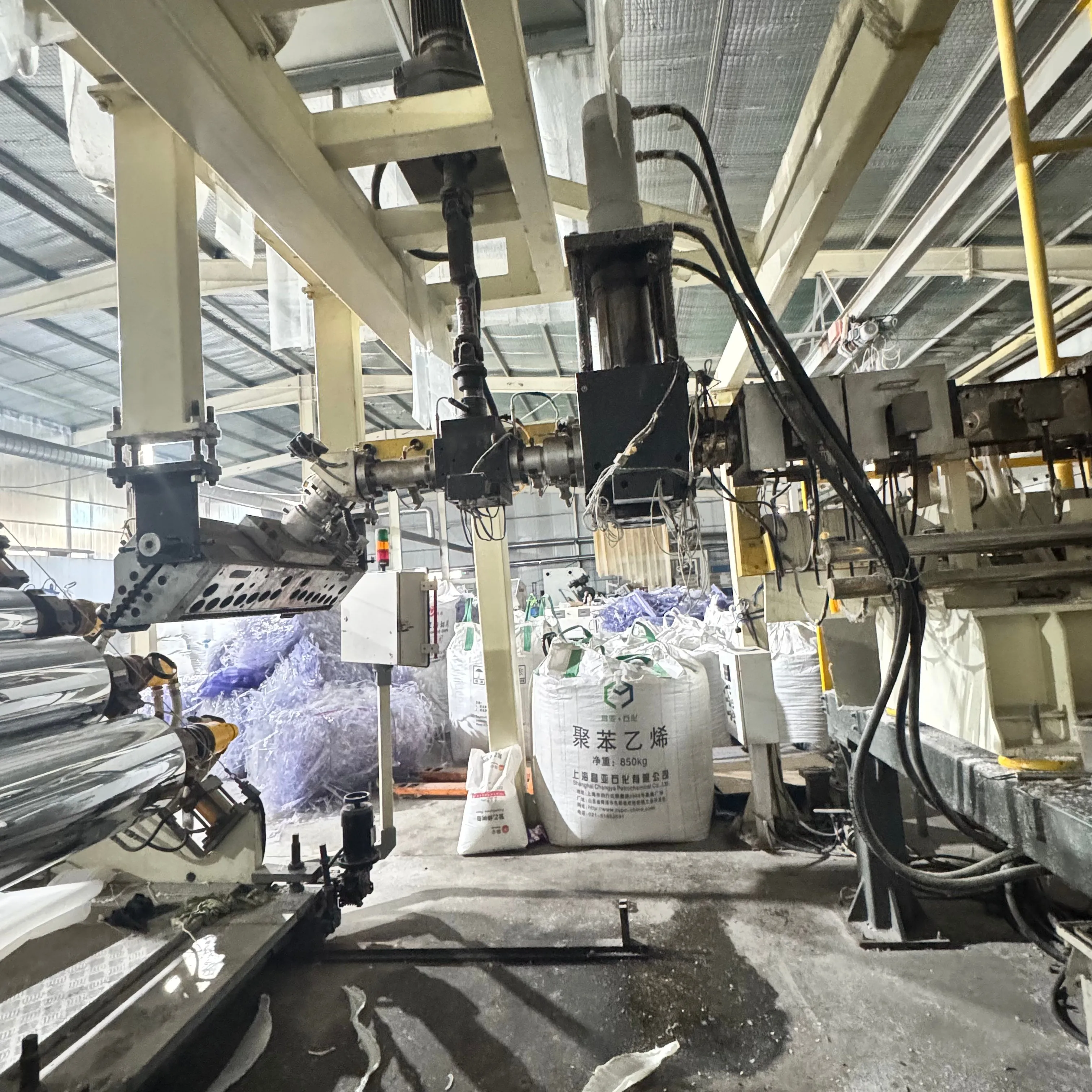
Before the melt becomes sheet, it passes through a double-position cylindrical screen changer and a 1,000 mm Jingcheng flat die. The screen changer helps filter the melt stream, while the die distributes material across the sheet width. Both sections operate under heat and pressure, so leakage, blocked flow paths, damaged sealing surfaces or uneven temperature can directly affect production.
Ask the operator to demonstrate the screen-changing action under suitable test conditions. Check the heating zones, hydraulic system, seals and switching movement. The inspection should also confirm what screens and spare parts are included. For the die, inspect lip condition, adjustment points, heater function and any evidence of damage or repair. A die may look complete from the outside while still requiring cleaning, polishing or adjustment before stable production.
During the PET sheet trial, observe the melt curtain across the width before it enters the calender. Look for obvious instability, edge variation or flow imbalance. The most useful result is not a few seconds of sheet at startup; it is sustained operation long enough to stabilize temperatures, pressure, roll speed and winding.
Check Three-Roll Condition and Servo Synchronization
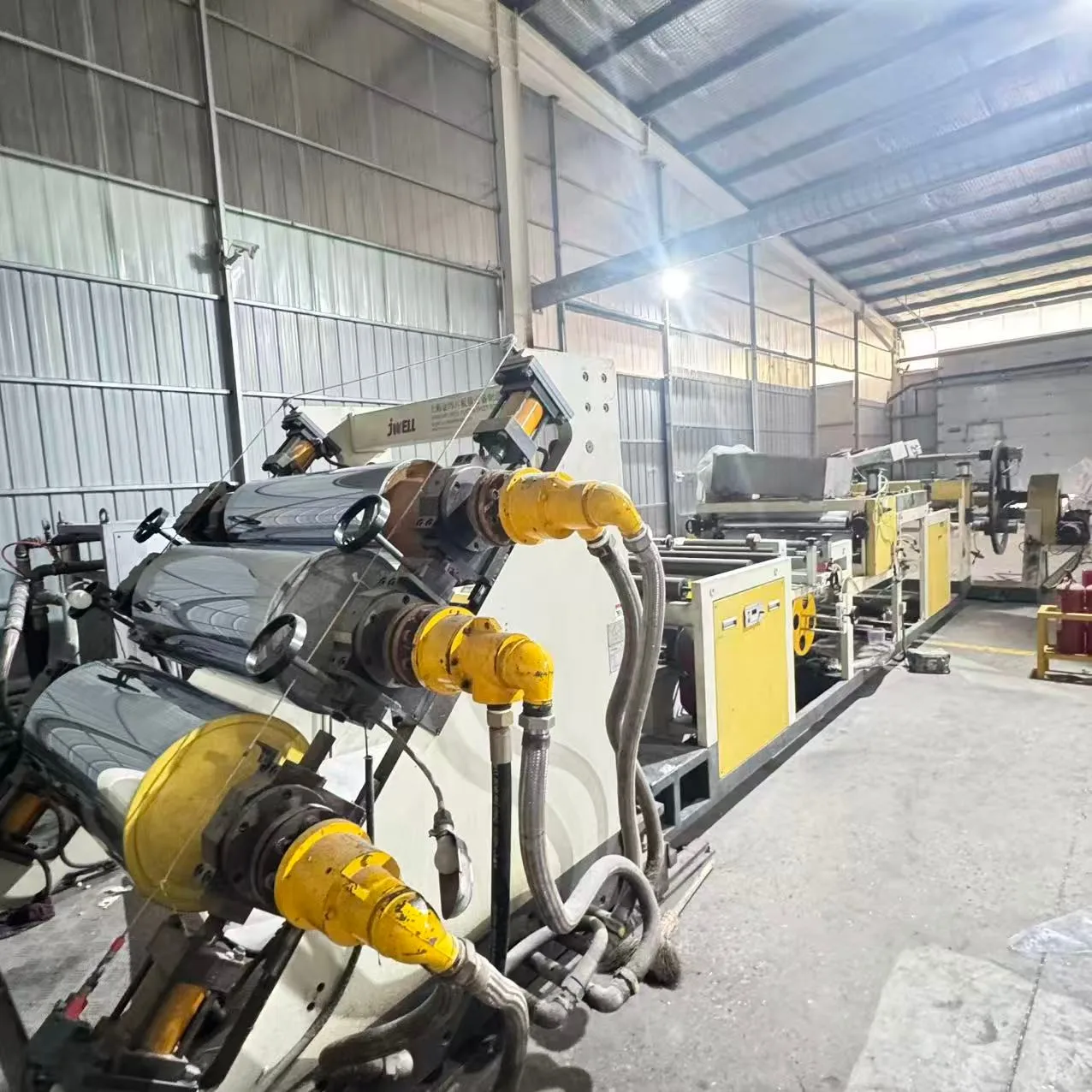
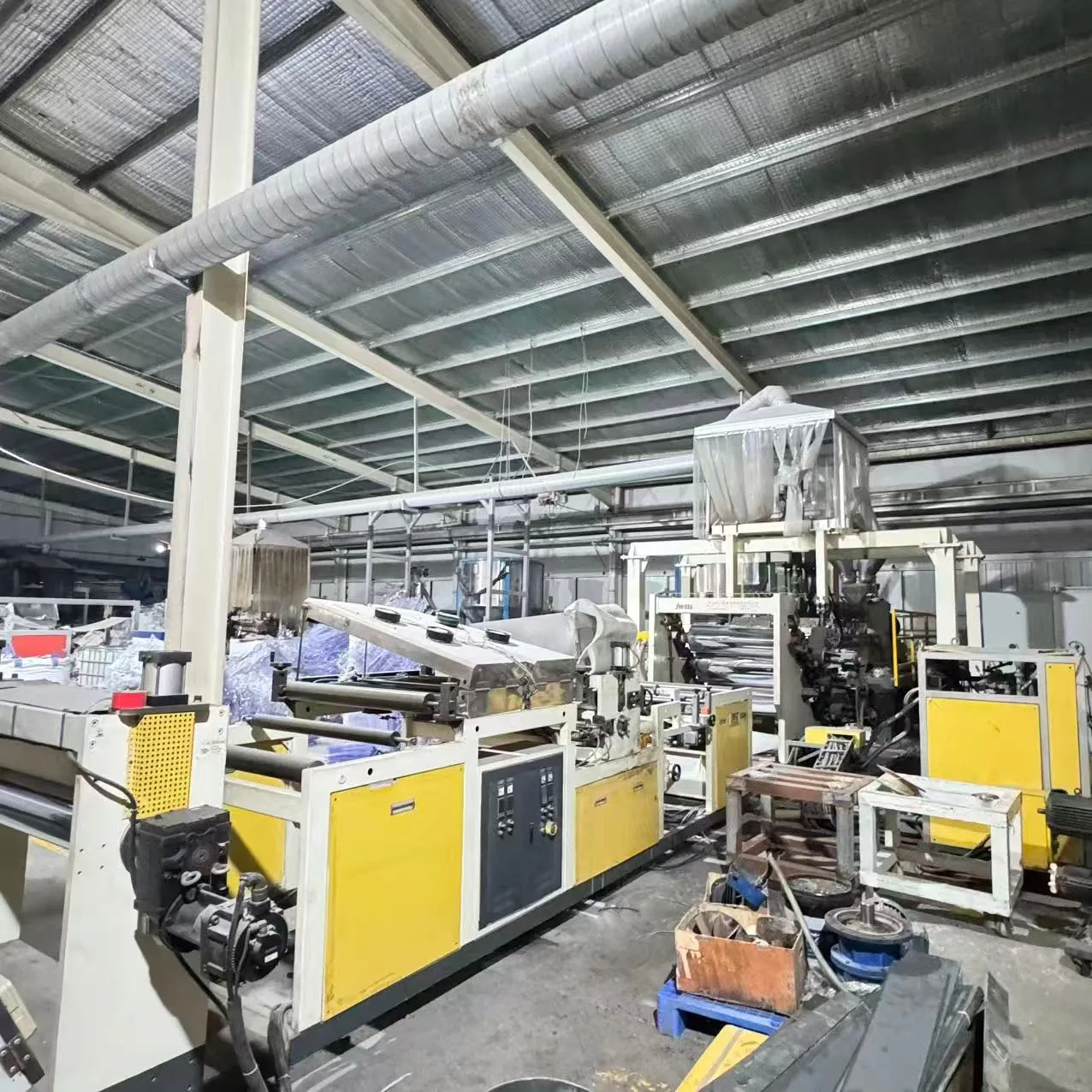
The three-roll calender is one of the most important inspection points on a sheet line. This used Jwell configuration has reported roll diameters of 500 mm, 500 mm and 380 mm. The rolls use servo drive with Japanese Yaskawa servo motors. Their job is to receive the hot sheet, control its path, remove heat and help establish sheet surface and thickness.
Inspect each roll surface under good lighting. Scratches, corrosion, impact marks or coating damage may transfer to transparent sheet. Check bearing noise, roll runout, temperature-control passages and adjustment mechanisms. The servo drives should start without unresolved alarms, and roll speeds should remain coordinated with die output and downstream take-off.
A trial should include thickness measurements across the usable width and at multiple points along the roll. The buyer should also inspect transparency, flatness, edge condition and any visible lines or surface marks. If the line is intended for clear food packaging, visual quality may be as important as nominal thickness. If recycled PET will be used, test the planned material blend instead of relying only on a virgin-resin demonstration.
Review Downstream Treatment and Three-Station Winding
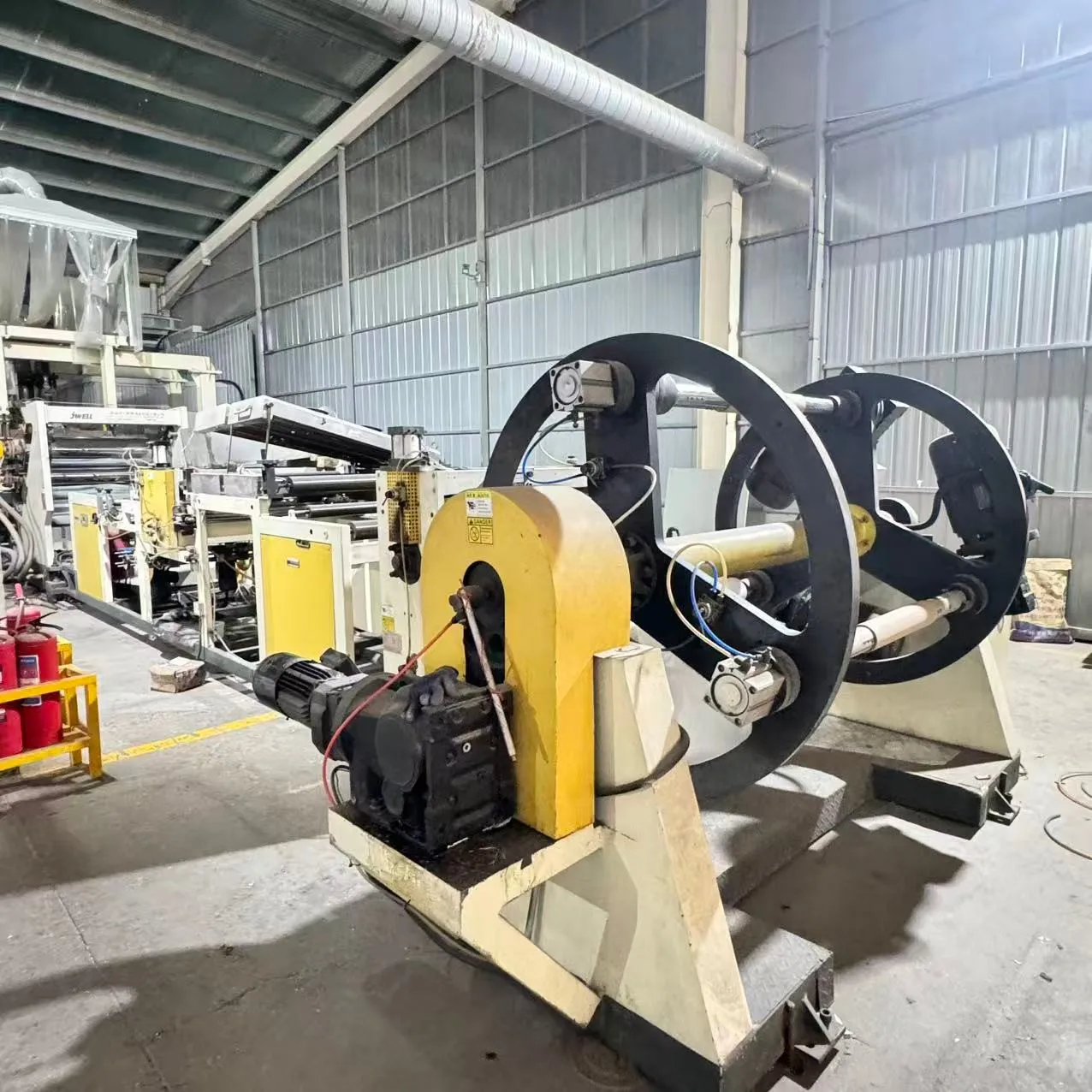
After calendering, the sheet travels through cooling, guiding and downstream treatment before winding. This line includes circular-knife edge trimming, one silicone-oil coating oven set and three-station winding. Each section must be tested because a line that extrudes acceptable sheet can still create problems through unstable tracking, poor trimming, uneven coating or loose winding.
Check the circular knives for blade condition, adjustment range and safe guarding. Confirm how edge trim is handled and whether any trim collection or recycling equipment is included. For the silicone-oil section, inspect the application mechanism, oven heating, controls and ventilation. The actual coating recipe and food-contact requirements remain the buyer's responsibility and should be validated for the target market.
During winding, observe tension, roll alignment and changeover between stations. Confirm core size, winding direction, maximum practical roll diameter and the interface required by the downstream thermoforming machine. Three winding stations are a useful configuration feature, but the buyer should not assume a particular automation sequence until it is demonstrated.
Verify Electrical Controls and Documentation
This machine is described as having touchscreen operation with a Siemens display, ABB inverter control for the main drive and Yaskawa servo systems for the roll section. These components can make operation and maintenance more structured, but their age, program status, alarm history and documentation must be checked.
Open the control cabinet during a safe, powered-down inspection and compare installed components with the sales list. During operation, test the touchscreen pages, temperature settings, motor controls, emergency stops and interlocks. Ask whether PLC and HMI program backups, parameter records, electrical drawings and drive manuals are available. Replacement availability for older electronics should also be considered before export.
Photograph nameplates and record model numbers rather than relying only on brand descriptions. If the machine will be dismantled for shipment, every cable, sensor, pipe and mechanical interface should be labeled. A clear dismantling record reduces installation time and the risk of wiring errors at the destination factory.
Demand a Real PET Sheet Trial
A used-machine video is valuable evidence only when its scope is clear. A walk-around video confirms physical appearance, while a production video can show feeding, extrusion, calendering and winding. Neither replaces measurement of the resulting sheet. The best acceptance process combines video documentation with a written test sheet and retained samples.
<video controls preload="metadata" width="100%" poster="https://sc02.alicdn.com/kf/H5c4213f9c76a4f4eaa774408e719425eN.jpg"> <source src="https://sc02.alicdn.com/kf/H4e994852f9ae44948a0f5cb24393c7c1P.mp4" type="video/mp4"> Your browser does not support the video tag. </video>
For the trial, record:
- PET material type and material preparation
- Virgin and recycled-material ratio
- Sheet thickness and usable width
- Main-motor load and stable running period
- Vacuum-system status
- Melt pressure and temperature settings where available
- Roll speeds and temperature-control condition
- Sheet thickness measurements across the width
- Transparency, surface, edge and winding result
- Roll weight or timed output when capacity verification is required
If possible, test a retained roll on the intended thermoforming machine. A forming test can reveal whether the sheet reheats, draws and cuts as required for the final fruit box, cup, tray or container.
Match the Line to the Application
Transparent PET sheet produced by this type of line can supply thermoforming projects such as fruit boxes, milk-tea cups, egg trays, food containers, lids and clamshell packaging. However, the name of the final product is not enough to define the sheet. Buyers should specify dimensions, depth, unit weight, transparency target and forming-machine type.
Fruit boxes and clamshells are normally evaluated with a three-station thermoforming-machine direction when integrated forming, cutting and stacking are required. Cup projects may need a cup-making-machine configuration depending on geometry and depth. Egg-tray projects require confirmation of material structure, sheet behavior and mold design. The extrusion line, roll specification, thermoformer and mold must therefore be treated as one production chain.
When requesting a quotation, state whether the project needs only the used PET sheet line or a complete solution including forming equipment, molds and auxiliary systems. This prevents an apparently attractive machine price from turning into a mismatched production investment.
Frequently Asked Questions
Is a 132kW motor enough to determine PET sheet output?
No. Output also depends on material, thickness, width, screw condition, feeding, vacuum performance, process settings and quality requirements. Use a timed material test for capacity confirmation.
Why inspect the screw and barrel on a used twin-screw extruder?
Wear can affect conveying, mixing, pressure stability and output. External photographs cannot reveal internal wear, so inspection and production behavior must be considered together.
Is vacuum venting enough for transparent PET sheet?
Vacuum venting is an important process feature, but sheet quality still depends on resin condition, material preparation, process stability and the required transparency standard.
Why measure sheet thickness across the width?
A single center measurement cannot show cross-web variation. Measurements at multiple positions help evaluate die distribution, roll adjustment and practical usable width.
What documents should be requested with a used line?
Request the final delivery list, component nameplates, electrical drawings, available PLC/HMI backups, drive parameters, dismantling records, test conditions and retained sheet samples where possible.
Final Buying Recommendation
The listed Jwell line has a strong documented configuration: 75 mm parallel twin screws, vacuum venting, twin feeding, a 132 kW ABB-controlled main drive, 1,000 mm Jingcheng die, servo three-roll calender, Yaskawa motors, Siemens touchscreen, silicone-oil coating oven and three-station winding. Those specifications justify a closer technical evaluation, not an automatic purchase decision.
Before buying, define the target PET sheet and final thermoformed product, inspect wear points, run representative material, measure the sheet and document every included component. A verified test and clear acceptance agreement are the most effective ways to reduce the risk of buying used PET sheet extrusion equipment.
The commercial comparison should include more than the machine price. Consider required repairs, missing accessories, dismantling, packing, shipping, installation, electrical adaptation and the time needed to restart production. A lower purchase price may not create a lower project cost if the line cannot meet the required sheet or arrives without essential documentation and components.
Use one representative product and sheet specification as the acceptance reference. Record the test material, thickness, usable width, running period and winding result. When possible, retain a sample roll for downstream thermoforming evaluation before the final purchase decision.
For the actual listed machine configuration, review the [Used Jwell 75mm Twin-Screw PET Sheet Extrusion Line](https://thermoformmachinery.com/used-jwell-pet-sheet-extrusion-line.html) product page and compare its documented components with the inspection checklist above.