Used Jwell 75mm Twin-Screw PET Sheet Extrusion Line
**Meta title:** Used Jwell PET Sheet Extrusion Line | 1000mm Width
**Meta description:** Used Jwell 75mm twin-screw PET sheet extrusion line for 0.3–1.5mm transparent sheet, with 132kW motor, vacuum venting and 3-station winding.
**Suggested URL slug:** `used-jwell-pet-sheet-extrusion-line`
**Primary keyword:** used PET sheet extrusion line
**Secondary keywords:** used Jwell PET sheet extruder, 75mm twin-screw PET extruder, 1000mm PET sheet production line, PET thermoforming sheet machine
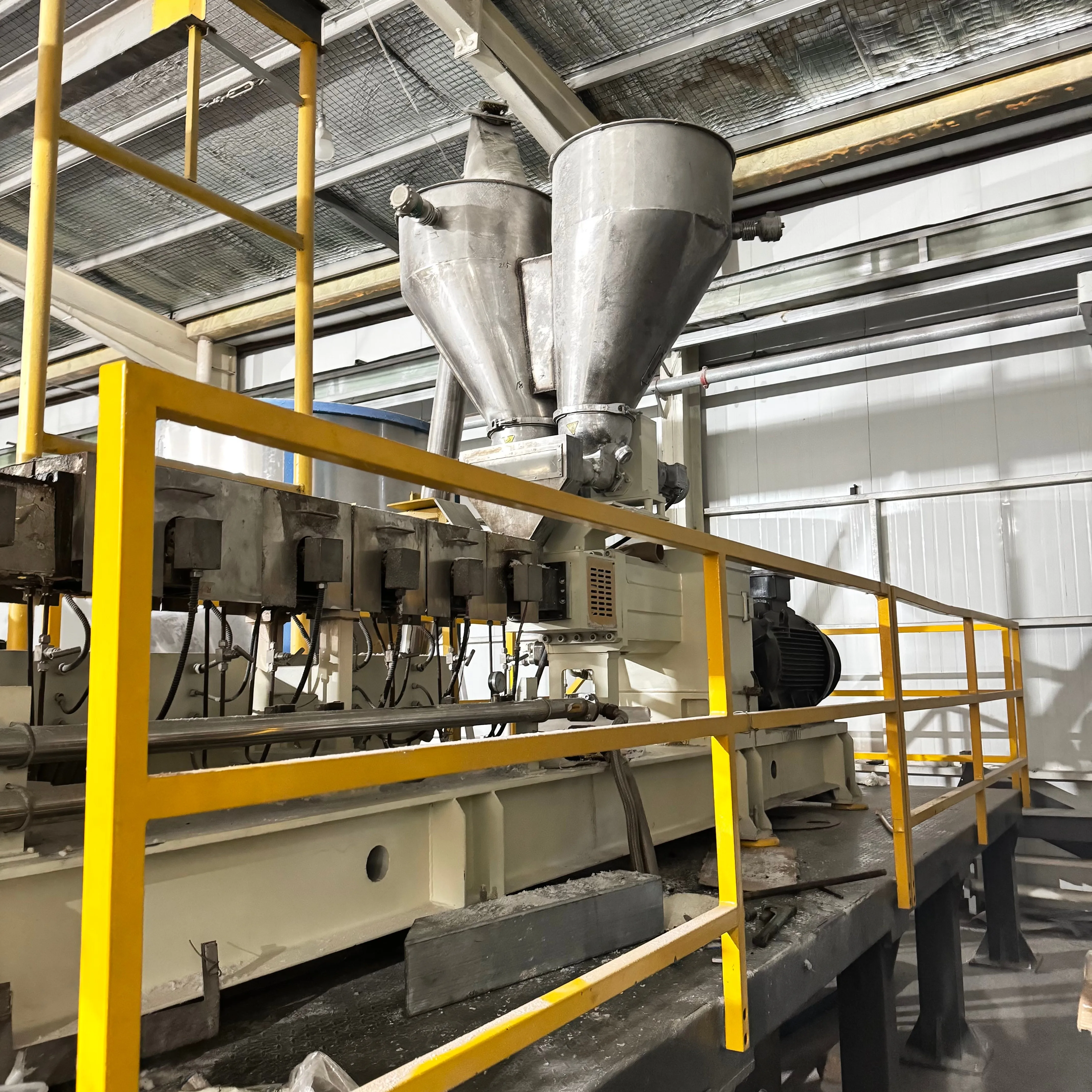
This used Jwell PET sheet extrusion line is configured for producing transparent PET sheet for downstream thermoforming applications. The reported sheet thickness range is **0.3–1.5 mm**, with a **1,000 mm working width** and a **1,000 mm Jingcheng flat die**. Its extrusion section uses a **75 mm parallel twin-screw configuration**, vacuum venting, twin hoppers and twin feeding units. The main drive is powered by a **132 kW motor** controlled by an **ABB inverter**.
The downstream section includes servo-driven three-roll calendering, Yaskawa servo motors, circular-knife edge trimming, a silicone-oil coating oven and three-station winding. The line is suitable for producing PET sheet used for fruit boxes, milk-tea cups, egg trays and other thermoformed packaging. Because this is used machinery, the final technical scope, operating condition, available accessories and production result must be confirmed through inspection and a material test before purchase.
Technical Configuration at a Glance
The following specifications are based on the information supplied for this machine. They should be checked against equipment nameplates, control-system records and an actual production test before a final sales contract is prepared.
| Item | Reported configuration |
|---|---|
| Machine condition | Used |
| Original machine brand | Shanghai Jwell |
| Material | PET |
| Screw configuration | 75 mm parallel twin-screw |
| Sheet thickness range | 0.3–1.5 mm |
| Working width | 1,000 mm |
| Main motor | 132 kW |
| Main drive control | ABB inverter |
| Feeding system | Twin hoppers and twin feeding units |
| Degassing | Vacuum venting |
| Screen changer | Double-position cylindrical screen changer |
| Flat die | Jingcheng brand, 1,000 mm width |
| Calender rollers | 500 + 500 + 380 mm diameters |
| Three-roll drive | Servo drive |
| Servo motor brand | Yaskawa, Japan |
| Control interface | Touchscreen operation with Siemens display |
| Edge trimming | Circular-knife trimming |
| Surface treatment | Silicone-oil coating oven set |
| Winding | Three-station winding |
| Typical sheet | Transparent PET sheet for thermoforming |
These details describe the listed configuration, not a guaranteed output rate or energy-consumption figure. Production capacity depends on resin, recycled-material ratio, sheet thickness, usable width, screw condition, heating performance, die adjustment, line speed and the required sheet quality. Buyers should request a trial using representative material and a target sheet specification rather than judging the line from motor power or screw size alone.
75mm Parallel Twin-Screw Extrusion With Vacuum Venting
The extrusion section uses a 75 mm parallel twin-screw arrangement. Twin-screw processing supports material conveying, mixing and melt preparation before the PET reaches the flat die. The line also includes vacuum venting, which is an important process feature for removing volatile components and moisture-related gas from the melt path. However, vacuum venting does not eliminate the need to evaluate raw-material preparation and actual sheet quality under the buyer's intended production conditions.
Twin hoppers and twin feeders give the line two controlled material-input points. This configuration may support a production recipe that combines different material streams, but the exact feeding strategy must be confirmed during commissioning. The main motor is rated at 132 kW and is paired with an ABB inverter for drive control. On a used extrusion line, buyers should inspect the motor, gearbox, screw and barrel condition, heater zones, vacuum system, feeder accuracy and inverter alarms before agreeing on acceptance.
A material trial should check melt stability, vacuum performance, pressure behavior and continuous sheet formation. The operator should also inspect whether any abnormal vibration, noise, leakage or temperature instability appears after the line reaches a steady operating condition.
1000mm Jingcheng Die and Servo Three-Roll Calender
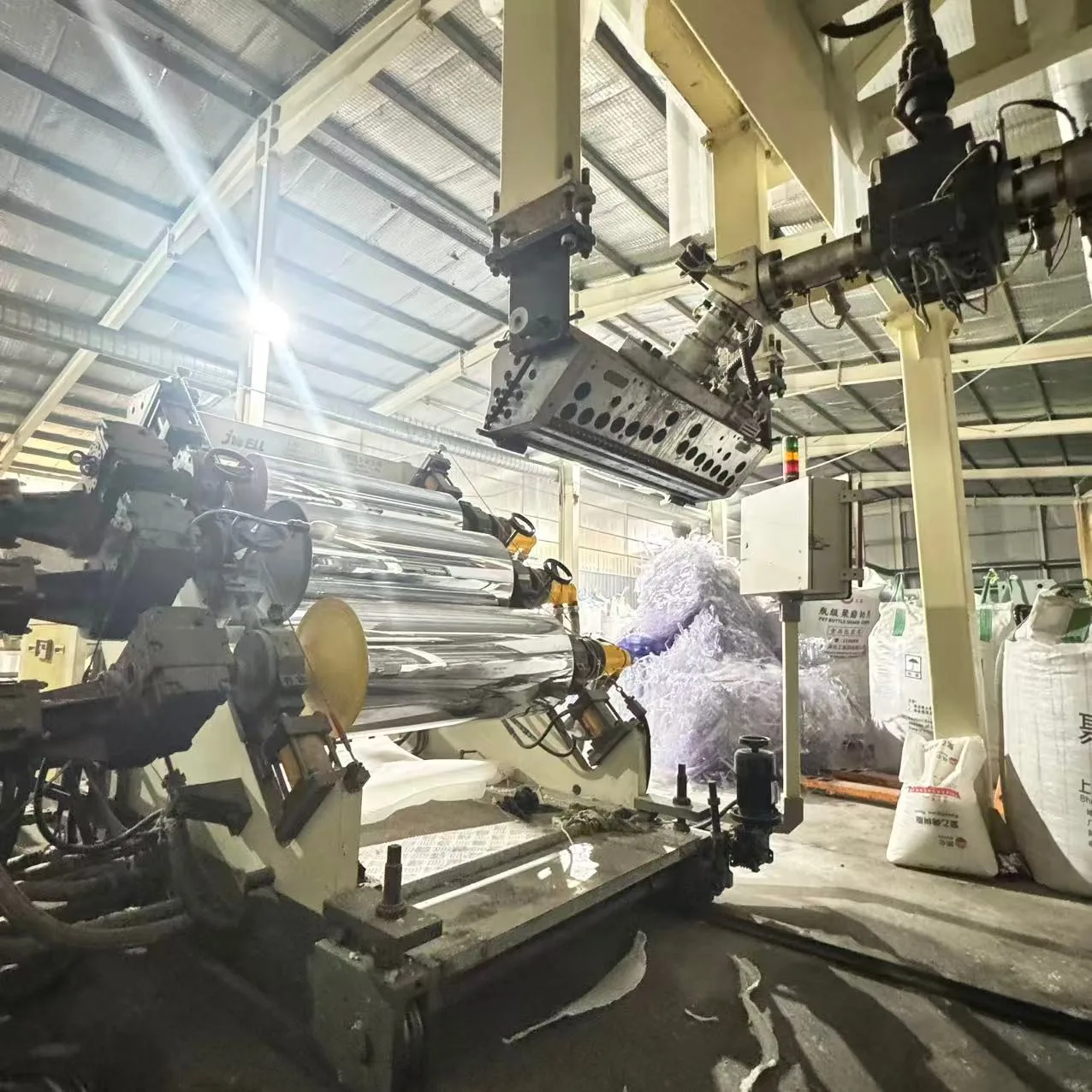
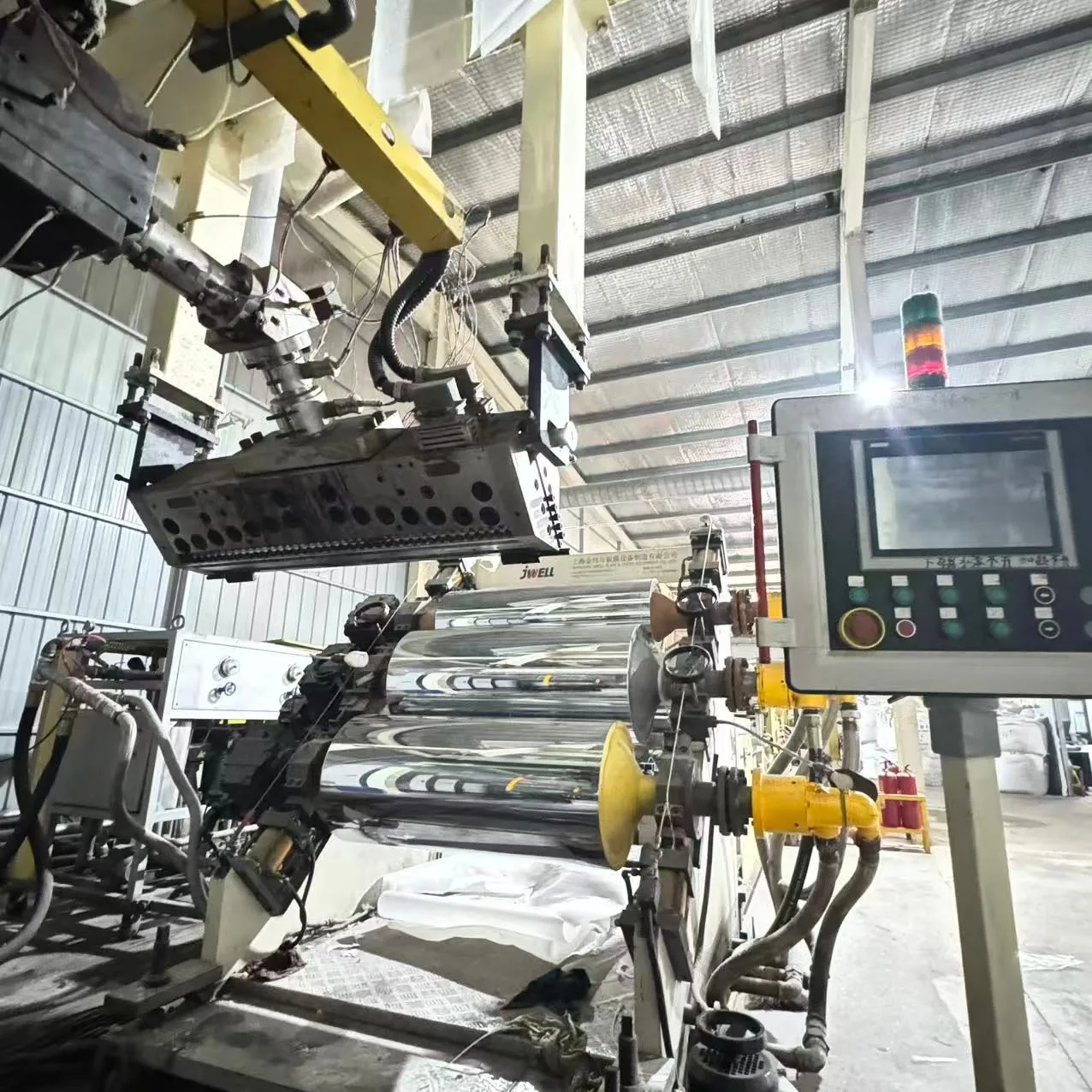
After plasticizing and venting, the PET melt passes through a 1,000 mm Jingcheng flat die. The die distributes the melt across the sheet width before the hot web enters the three-roll calender. The reported roller diameters are **500 mm, 500 mm and 380 mm**. This roll arrangement is driven by a servo system using Japanese Yaskawa servo motors.
The three-roll section is responsible for forming, cooling and stabilizing the sheet as it exits the die. Servo drive can support coordinated roll-speed control, but the final result still depends on mechanical condition, roll-surface condition, temperature control, die adjustment and synchronization with the rest of the line. During inspection, the buyer should check the chrome surfaces for damage, confirm roll runout and bearing condition, and observe whether roll speed remains stable under load.
The line also uses a double-position cylindrical screen changer. A screen changer filters the melt before it reaches the die, helping manage contamination in the process stream. For a used machine, the sealing surfaces, hydraulic action, heating condition and switching operation should be tested. The supplied photographs show the die and three-roll section, but photographs alone cannot verify internal wear or sheet-thickness consistency.
Edge Trimming, Silicone-Oil Coating Oven and Winding
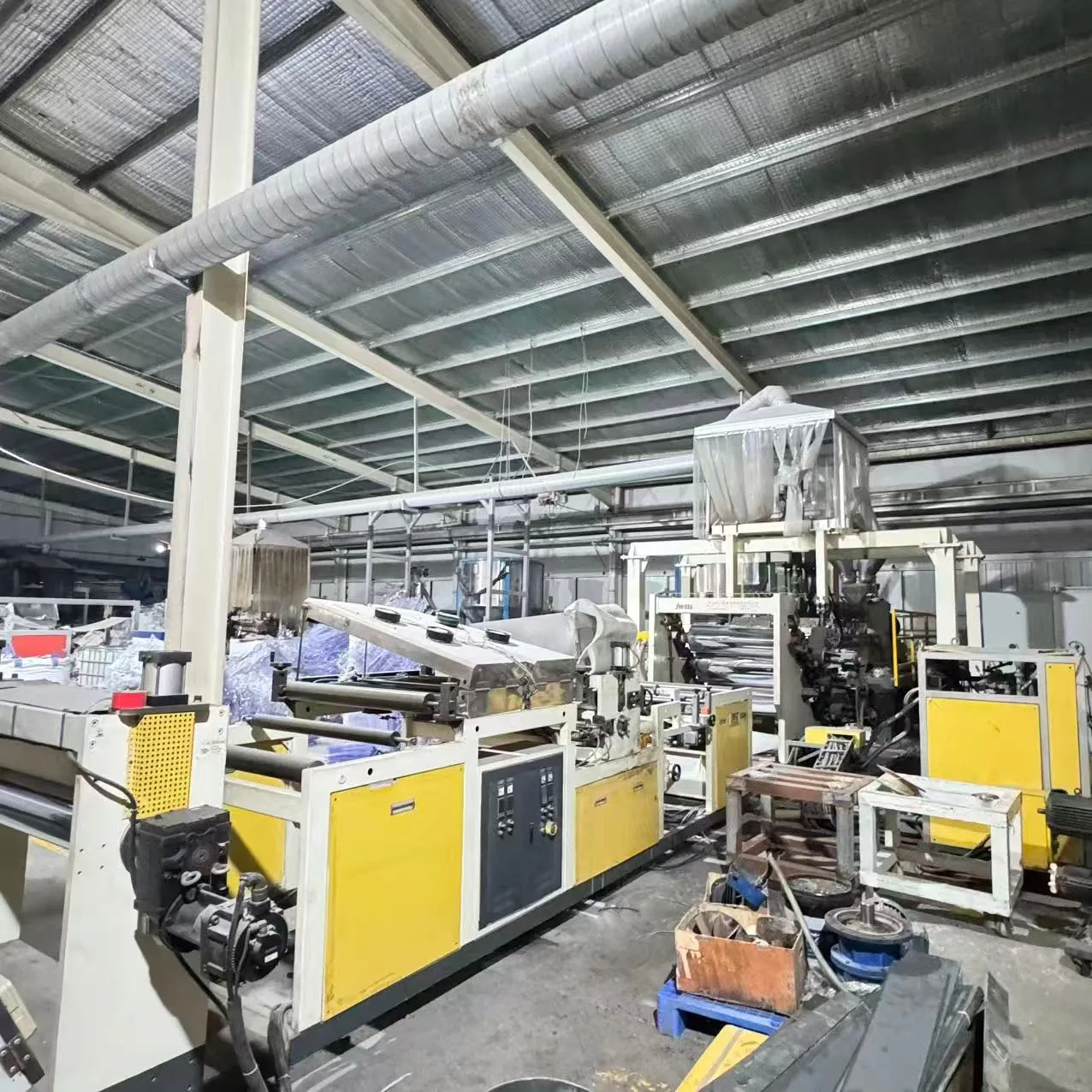
Downstream of the calender, the PET sheet passes through guiding and cooling sections before edge finishing and winding. Circular knives trim the sheet edges so the web can be prepared for stable collection. Knife position, blade condition and tracking should be adjusted to the actual sheet width. Buyers should confirm whether the trimmed edge material is collected or returned to the material system and what additional equipment is included in the final delivery scope.
The line is supplied with one silicone-oil coating oven set. For thermoforming applications, a coating section may be used to apply and dry a controlled surface treatment according to the customer's product requirements. The coating formula, application rate, drying temperature and compatibility with the final packaging use must be established by the buyer's process team. The supplied configuration should be inspected for pump, roller, oven-heating and ventilation condition.
A three-station winding system collects the finished transparent PET sheet. Multiple winding stations support roll changeover and production organization, but the actual winding sequence and automation level should be demonstrated during the test. Sheet tension, roll alignment, core size, maximum roll diameter and roll weight all need confirmation before the line is matched with a downstream thermoforming machine.
PET Sheet Applications
The reported thickness range of 0.3–1.5 mm covers multiple rigid thermoforming-sheet applications. The correct thickness for any project depends on product dimensions, forming depth, stacking load, transparency target, mold design and end-use requirement. A buyer should therefore start with the finished package rather than selecting the extruder from the nominal width alone.
Typical downstream products include:
- Transparent fruit boxes and produce containers - Milk-tea cups and other thermoformed beverage cups - Egg trays and protective packaging trays - Food containers, lids and clamshell packaging - Clear trays and retail display packaging
For containers, fruit boxes, lids and trays, PET sheet is commonly fed into a roll-fed thermoforming machine. Deep cup projects require specific matching among sheet thickness, heating behavior, cup geometry, forming machine and mold. This extrusion line produces upstream sheet; it does not replace the thermoforming machine or product mold. Buyers who need a complete project should provide the final product drawing, dimensions, weight, material structure and expected output so the extrusion and forming sections can be evaluated together.
Real Machine Video
The following supplied video can be embedded on the sales page so buyers can review the physical line and its configuration. Before the page describes it as a production test, the video should be checked to confirm whether it shows the machine running with PET material and producing finished sheet.
For a serious equipment evaluation, request more than a short walk-around video. A useful test record should cover machine startup, feeding, vacuum operation, melt pressure, die output, three-roll operation, edge trimming, coating, winding and the finished roll. Close-up footage of the control screen and drive status can also help document the test conditions.
Ask for the test date, resin information, sheet thickness and running duration to be recorded with the video. This context separates a physical-condition video from production evidence and gives the buyer a clearer basis for comparing the result with the required application.
Used-Machine Inspection Checklist
A used extrusion line can reduce initial equipment investment, but only when its real condition and project fit are checked carefully. The machine should be inspected as a complete production system rather than as a list of premium component brands.
Before purchase, confirm:
1. Screw and barrel wear, gearbox noise and lubrication condition. 2. Main motor operation and ABB inverter status. 3. Twin-feeder stability and calibration. 4. Vacuum pump, venting port and piping condition. 5. Heater, thermocouple and temperature-control response. 6. Screen changer sealing and switching operation. 7. Jingcheng die condition and usable sheet width. 8. Three-roll surface condition, bearings and servo synchronization. 9. Yaskawa servo drives and any stored alarms. 10. Siemens touchscreen functions, parameters and electrical drawings. 11. Circular-knife trimming, coating oven and three-station winding operation. 12. PET sheet thickness, transparency, flatness, edge quality and winding result during the material trial.
The final delivery list should identify every included component, control cabinet, spare part, platform, oven section and winding unit. Dismantling marks, cable labels and loading photos are also valuable for later installation.
Information Needed Before Quotation
To determine whether this used Jwell PET sheet extrusion line fits your project, send the following information:
- Final product photo or drawing - Product dimensions and forming depth - Required PET sheet thickness and usable width - Virgin, recycled or blended PET material plan - Transparency and surface-treatment requirements - Target sheet output - Existing thermoforming-machine feeding requirements - Local voltage and factory power conditions - Destination country and port - Required inspection, testing and installation support
After reviewing these details, the supplier can compare your target with the listed machine configuration and arrange a more relevant test. Price, availability, delivery scope, machine condition and acceptance criteria must be confirmed separately before an order is finalized.
If output verification is required, specify the test duration and measurement method in advance. If the machine will be exported, also confirm dismantling, labeling, packing, loading and installation-support requirements. These items affect both the commercial offer and the practical restart of the line at the destination factory.
Frequently Asked Questions
What thickness can this used PET sheet line produce?
The reported range is 0.3–1.5 mm. The actual stable range for a specific material, width and quality target should be demonstrated during a material test.
Is this a single-screw or twin-screw extrusion line?
It is described as a 75 mm parallel twin-screw extrusion line with twin hoppers, twin feeding units and vacuum venting.
What is the sheet width?
The reported working width and flat-die width are both 1,000 mm. The guaranteed usable sheet width should be confirmed during testing and written into the technical agreement.
What products can be made from the PET sheet?
The sheet can be used as upstream material for fruit boxes, beverage cups, egg trays, food containers, lids, clamshells and other thermoformed packaging, subject to sheet and forming-machine matching.
Is production capacity guaranteed by the 132kW motor?
No. Motor power is only one configuration item. Output depends on material, sheet thickness, width, screw and barrel condition, process settings and required quality. Capacity should be verified by a timed production test.
What should be tested before buying this used line?
Test the extrusion section, vacuum system, feeders, screen changer, die, three-roll calender, coating oven, edge trimming, winding and final PET sheet. Also inspect electrical alarms, mechanical wear and the complete delivery list.
Request a Test and Configuration Review
Send WEIXIN Machinery your PET product drawing, sheet specification, material plan and target output. We can review whether this used Jwell 75 mm parallel twin-screw line matches your project and discuss the required inspection, material test, downstream thermoforming machine and delivery scope.
A used machine should be purchased on verified condition and production fit—not on photographs, brand names or nominal specifications alone.
For the next step, provide one target product and one representative PET sheet specification. The review can then focus on usable width, thickness, transparency, winding format and expected output rather than a generic machine comparison. If the line passes that first matching review, a detailed inspection and material-test plan can be prepared around the most important acceptance points.
The final agreement should identify the included equipment, test conditions, measured result and delivery responsibilities. This gives both buyer and supplier a practical reference for inspection, dismantling and handover.
Before making a final purchase decision, review the [used PET sheet extrusion line inspection guide](https://thermoformmachinery.com/news/used-pet-sheet-extrusion-line-inspection-guide.html) to compare this machine configuration with the key checks for screw condition, vacuum venting, die, three-roll calender, controls, winding and real sheet testing.